AI consulting · 24 July 2026 · Asfandyar Malik
How I’d Make Money With Claude in 2026
3 chapters, played or read
Runtime 02:15
Overview
Overview
"The way people make money with Claude is changing, and if you're only just getting started, the thing everyone told you to do is the thing that's about to stop working.
capex

manpower
00:0002:15
the shift
"The way people make money with Claude is changing, and if you're only just getting started, the thing everyone told you to do is the thing that's about to stop working.
For two years the advice was identical: start an AI agency, sell automations, build workflows for businesses. It worked. It's getting harder every month, because everyone was told the same thing and they all showed up at once.
But there's one path that's getting easier — and it's getting easier for exactly the same reason the agency path is getting harder. I'll show you what it is, and the four steps to start on it this week."
Why now — money in, results out
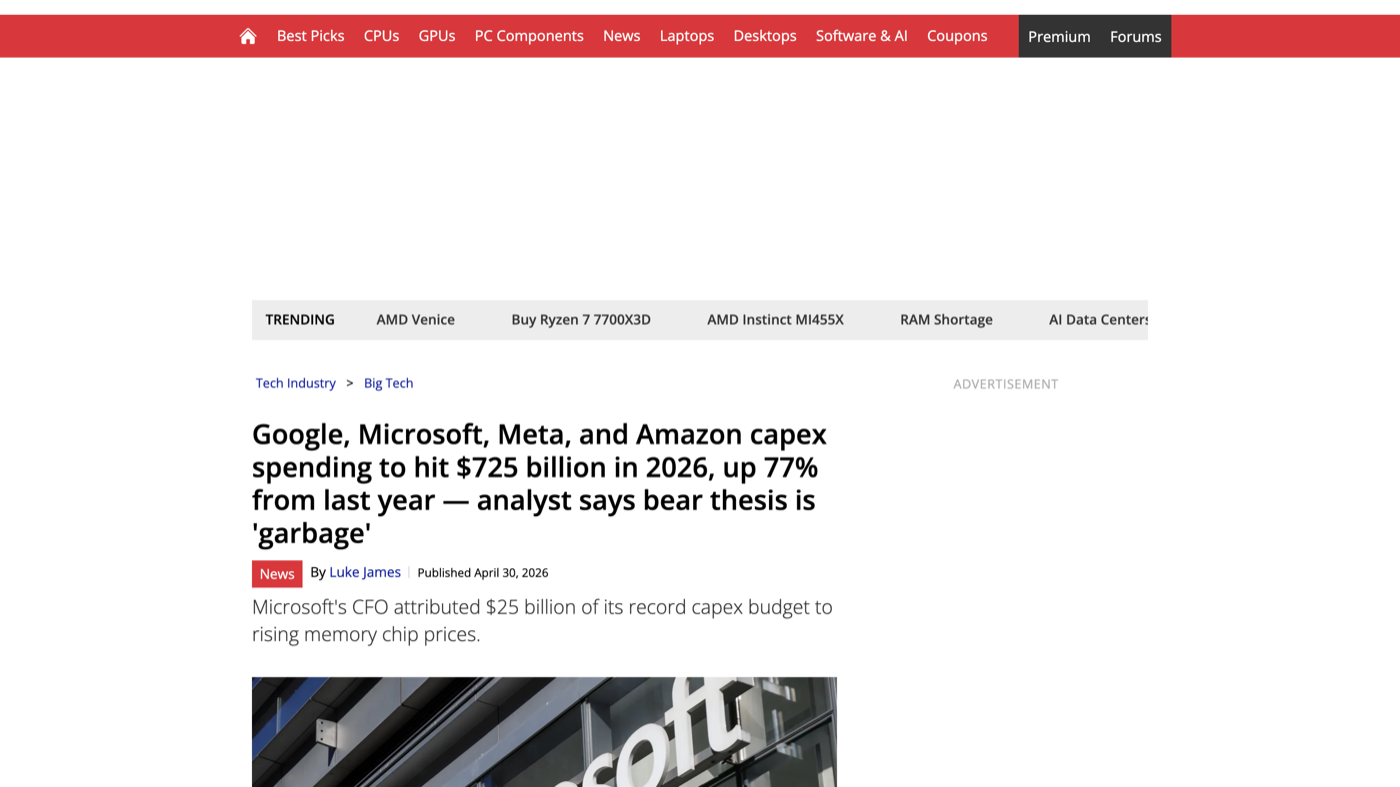
"First, why now. The money going into AI is genuinely absurd. Four companies — Amazon, Microsoft, Google, Meta — are on pace for something in the range of seven hundred billion dollars this year, combined.
Here's the part that matters, though. All that money went in — and mostly nothing came out the other side. An MIT study found that around ninety-five percent of generative AI pilots inside companies produced little to no measurable impact on the bottom line. Ninety-five percent. Companies bought the tools, ran the pilot, and got nothing.
Now think about what that actually means. It isn't that AI doesn't work — you and I both know it works, you've probably proven it to yourself this month. It means nobody inside those companies knows how to make it work on their specific problems. That gap is the opportunity."
The opportunity — and the objection nobody addresses
"And before I go further, let me say the thing most videos like this never say out loud.
Most of you don't want to start an agency. You don't want to chase clients, you don't want to sit on sales calls, you don't want to run a business. You're learning this stuff so you don't get left behind, and you want to be really good at your job and get paid properly for it. Every make-money-with-AI video for the last two years has quietly excluded you. This one doesn't.
Because the role that gap creates isn't 'agency owner.' It's the person who walks into a business, finds where they're bleeding time and money, and uses Claude to fix it. That's it. Claude is the car. The business is the passenger. You're the one driving.
And people doing that are among the best-paid people in this entire space — while everyone else races to the bottom selling three-hundred-dollar automations.
Two paths — pick yours
"There are two versions of this, and they suit completely different people.
Path one: freelance. You work for yourself, client to client, find the problem, build the fix. Upside is freedom — your hours, your location, no ceiling. Independent consultants and strategic advisers just moved into LinkedIn's top ten fastest-growing US roles. The downside is real too: a great month, then a client leaves on a Tuesday and you're starting over — finding them, closing them, and doing the work. Take this path if you'd rather control your time than have a predictable paycheck.
Path two — and for most of you I think this is the smarter play — in-house. The consultant inside the company you already work at.
Look at the numbers. Eighty-eight percent of companies now use AI somewhere. About a third have scaled it past test projects. Six percent are actually seeing measurable impact. Roughly two-thirds of executives say their AI plans are stuck — not on budget, on skills they don't have inside. AI skills are now the single hardest thing companies have to hire for. Harder than IT. Harder than engineering. First time that's ever been true.
In-house, you trade some freedom for a stable paycheck — plus an advantage no outside agency can ever buy. You already know the business. You know the people, the systems, and exactly where the time gets wasted. And you don't wait for the job to be posted. You create it."
The one takeaway
"If you take one thing from this video, take this: become the AI person. Freelance or in-house, doesn't matter. Be the person everyone asks.
This is new enough that nobody has a ten-year head start on you. Graduated last month, or fifteen years at the same company — everyone's roughly on the same line. So go deep, find where it genuinely helps, and be the one who knows. Because once you're known for it, everything downstream — clients, promotions, raises — comes looking for you instead of the other way around.
Here are the four steps."
The four steps — with the live build inside step two
Step 1 — pick one painful problem and name the number.
"List every manual task you or your team did last week. Circle the one that eats the most hours. Say it's the report you rebuild from scratch every Friday.
Now — before you build anything — decide what number you're moving. This is the whole consultant mindset in one sentence. Most people build automations because they look cool, or because seven sub-agents makes a good LinkedIn post. A consultant finds the constraint and designs a fix that moves a specific number. For the Friday report, the number is four hours a week. Name it before you touch anything, because that number is what you're selling. You're selling the destination, not the journey. And the destination is always one of three things: time saved, mistakes cut, or money made.
And say this out loud to yourself: only use tools your company actually allows, and never put company or customer data into something that isn't approved. Be smart, or none of the rest of this matters."
Step 2 — build the fix. [THIS IS— do not narrate it, do it.]
"Now people hear 'build the fix' and think they need to write code. You don't. You need to give Claude the same things you'd give a new hire on their first day.
Step 3 — deliver it and prove the number moved.
"Now go prove it. Four hours down to twenty minutes is three and a half hours back, every week. That's the destination you promised, and you hit it — so show it. Team meeting, or straight to the owner. Then ask one question: 'does anyone have a task they'd want me to look at?'
That one question will do more for you than any pitch you could write. And every task it brings you runs the same loop: find the constraint, name the number, build the fix, prove it moved."
Step 4 — turn it into money.
"Freelance: your result is now a case study. Start with people who already know you — that's the warm play — cold outreach is the volume play after. The sequence that works is build one for free, then sell a paid audit, then price the build off the audit, then move them onto a monthly retainer. The retainer is the thing that ends the income roller coaster.
In-house: take your stack of wins to your boss, frame every single one as your boss's win, and then ask to make the role official. Companies are already posting these — 'AI enablement lead,' 'head of AI,' 'chief AI officer.' You're just becoming that person before the posting exists. And if you're job hunting right now: bringinto the interview. You walk in as the hire they've been failing to find."
The trap + recap + CTA
"One thing nobody warns you about on the in-house path, and I'd rather you hear it from me.
You can automate four hours out of your own week, tell nobody, and get exactly nothing for it — because the work just quietly disappears and no one knows it was you. That's why step one is naming the number before you build. The measurement isn't bureaucracy. It's the only proof that the win was yours. Do the work in public inside your company, or you're doing free consulting for your employer.
So: pick one painful task, name the number, build the fix with Claude, prove the number moved, and repeat until you're the person they can't run the department without.
I've put the audit prompt and the skill template I used in that demo in the description — free, go take them. And if you want the whole path, from your first build to your first paid client, that's what we do inside Claude Codex Mastery — nine dollars a month, and it's going up to twenty-nine. Link's below. I'll see you in the next one."
Screenshots, charts, and primary evidence.
Open any evidence visual full-size. This library contains real screenshots and project charts—no decorative generated artwork.
Keep exploring
More long-form resources built the same way — primary sources, working files, and commands that actually run.
Setup instructions rot faster than anything else here. Every command on this page is copied from the vendor's own documentation and linked to it — open the docs alongside this page and trust those over this one.